Some musical ideas do not disappear because they were wrong. Sometimes they disappear because the books went out of print. Because the language changed. Because the instruments changed. Because the composers were forgotten. Because the music was placed in a box, on a shelf, in an archive — waiting for someone to open it again.
This is The Musical Archeologist: forgotten ideas from music’s past. I’m Craig Dabelstein — conductor, musician, and owner of Maxime’s Music. In this series, we’ll explore old writings on music: books on wind bands, military music, instruments, performances, emotions, education, and the strange, persistent human need to make organised sound meaningful.
In this episode of The Musical Archeologist, Craig Dabelstein returns to Hermann Eichborn’s On the History of Instrumental Music to ask a different kind of question: not only what the book tells us, but what its sources leave out.
Eichborn’s world is full of town musicians, court trumpeters, guild players, military bandsmen, civic appointments, and official musical privileges. It is a fascinating history of music inside institutions — but it is also, almost entirely, a male and official world.
This episode explores the people institutional music history often forgets: women, amateurs, domestic musicians, informal teachers, servants, children, street performers, and others whose musical lives did not always leave paperwork behind.
The forgotten idea is simple but important: music history is not only made by the people institutions remember. It is also made by the people institutions forget.
The Musical Archeologist: Forgotten Ideas from Music’s Past
Written and presented by Craig Dabelstein
Music composed by Jeffrey A. Young
This episode is based on ideas arising from Hermann Eichborn’s On the History of Instrumental Music, translated by Craig Dabelstein and published by Maxime’s Music.
Buy the book: https://books.by/maximes-music
Podcast webpage: https://craigdabelstein.com/podcast/
Episode 9: A dreadful hullaballoo
What should a military band actually look like? […]
Episode 8: The bandmaster who had no authority
How can someone be held responsible for a band's success while having little authority over the people and resources needed to achieve it? […]
Episode 7: The freelance musicians who drove the army mad
How do you build an excellent musical organisation when its musicians are constantly coming and going? […]
Episode 6: Why Good Bands Need Good Systems
For Frédéric Berr, writing in 1838, good bands did not appear by accident. […]
Episode 5: Why do so many cultures invent the same instruments?
Why do cultures separated by oceans, deserts, and thousands of years so often create remarkably similar musical instruments? […]
Episode 4: The Strange Story of the Bone Flute
This episode examines historical accounts of flutes fashioned from human and animal bones and asks what these extraordinary objects can tell us about the people […]
Episode 3: Can Musical Instruments Reveal Human Migration?
Can a musical instrument become evidence of human movement? […]
Episode 2: Why Do Bagpipes Exist All Over the World?
When most people hear the word “bagpipe,” they immediately think of Scotland. But the bagpipe is not only Scottish. Versions of the instrument appear across […]
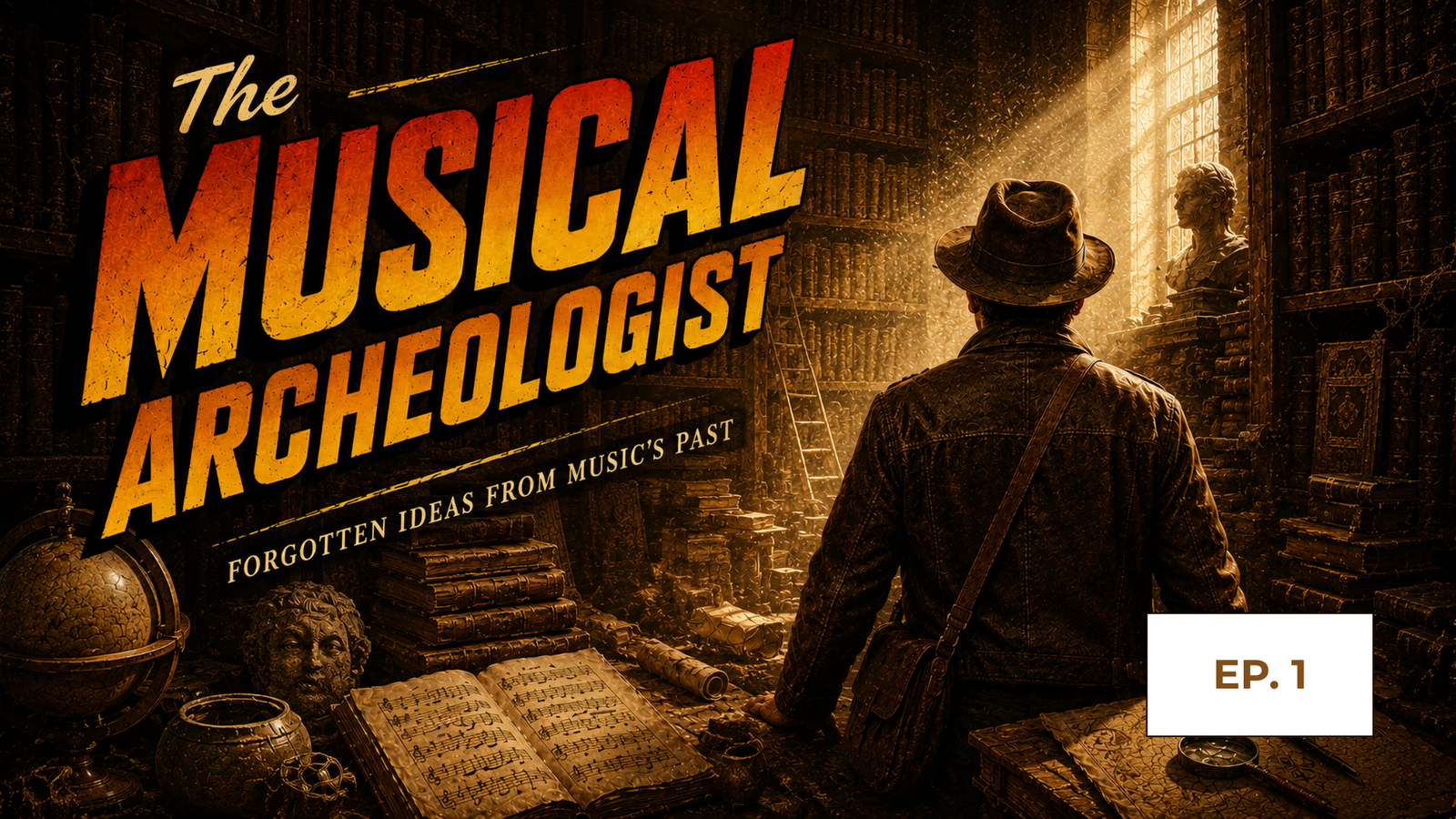
Episode 1: What was the first musical instrument?
In this opening episode of The Musical Archeologist, Craig Dabelstein explores a question raised by the Belgian musicologist Ernest Closson in L’Instrument de musique. […]